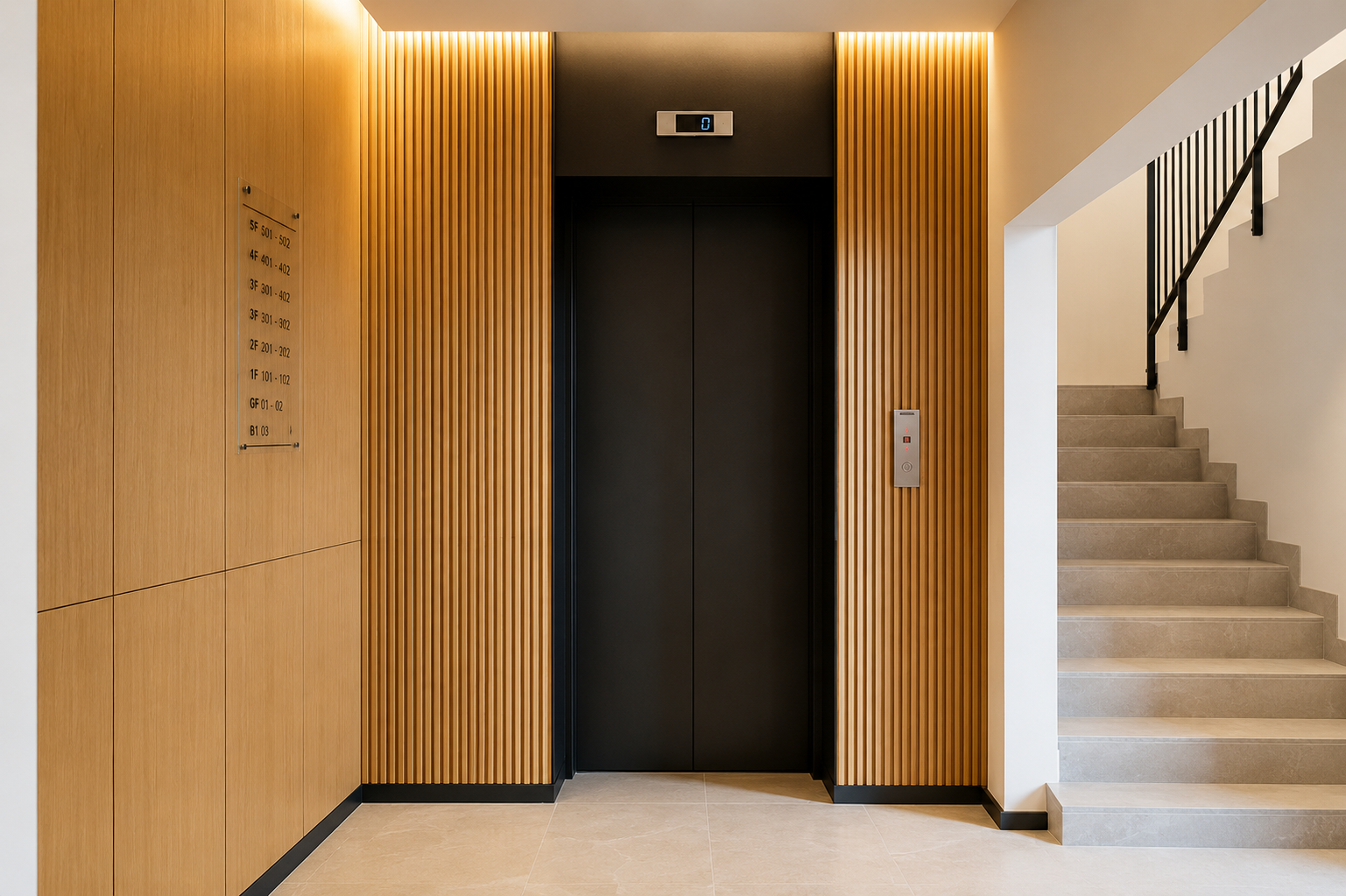
MACHINE ROOMLESS ELEVATOR
MACHINE ROOMLESS ELEVATOR
A Machine Roomless Elevator, commonly called an MRL Lift, is designed without a separate conventional machine room for the lift equipment. This arrangement can help reduce the additional space required for lift machinery and can be considered for residential, commercial and institutional buildings where the building layout is suitable for an MRL system. Unique Elevators Lifts (P) Ltd. supplies Machine Roomless Elevators in Delhi and nearby areas, along with maintenance, repair and AMC services.
In a conventional lift arrangement, the main lifting equipment may be located in a separate machine room. An MRL system places the required machinery within the lift shaft area, allowing the separate machine room to be eliminated.
This does not mean that an MRL lift can be installed in every building without planning. Shaft dimensions, overhead space, pit requirements, building height, passenger capacity, travel distance and the selected equipment all need to be considered.
For example, an architect planning a new commercial building may want to avoid allocating a separate room for lift machinery. An MRL arrangement can be considered where the building design and selected lift system support this type of installation.
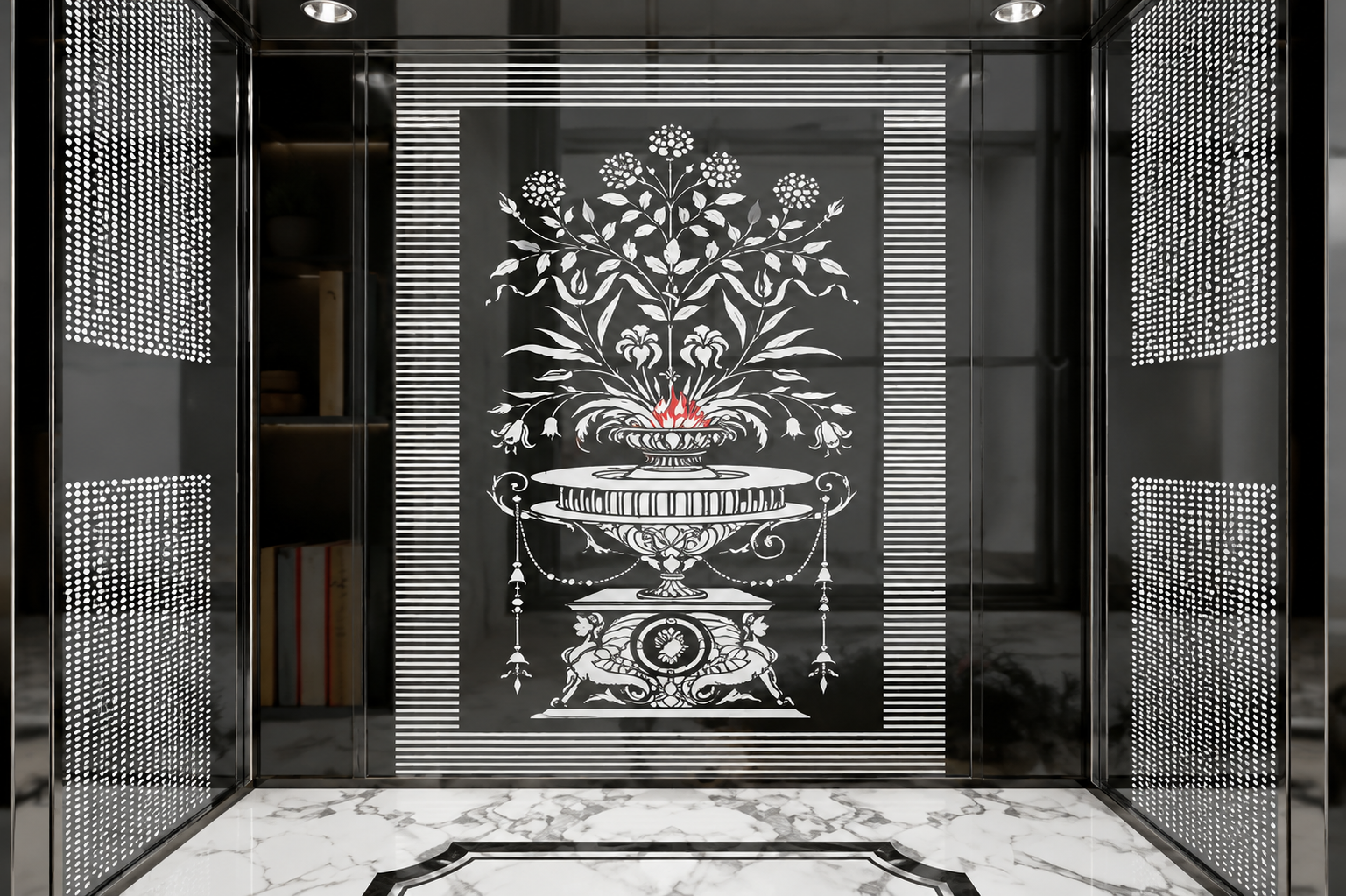
Applications
Technical Details
| Specification | Reference Details |
|---|---|
| Lift Type | MACHINE ROOMLESS ELEVATOR |
| Application | Passenger transportation |
| Drive System | Generally traction-based |
| Machine Room | Separate conventional machine room not required |
| Typical Capacity | 272 kg to 1,360 kg and above, depending on configuration |
| Typical Speed | Approximately 0.63 m/s to 1.75 m/s for commonly available passenger configurations |
| Passenger Capacity | Depends on rated load and cabin configuration |
| Door Type | Manual or automatic, depending on configuration |
| Cabin Size | Selected according to rated load, passenger requirements and available space |
| Number of Stops | Based on building layout and travel requirements |
| Power Supply | Depends on the selected equipment and installation |
| Installation | Planned according to shaft dimensions, building design and site conditions |
The figures above are general reference values for commonly available MRL passenger-lift configurations and are not fixed specifications for every Machine Roomless Elevator supplied by Unique Elevators Lifts. Final capacity, speed, cabin dimensions, door arrangement, number of stops, power requirements and other technical details should be confirmed according to the selected lift system and approved site design.
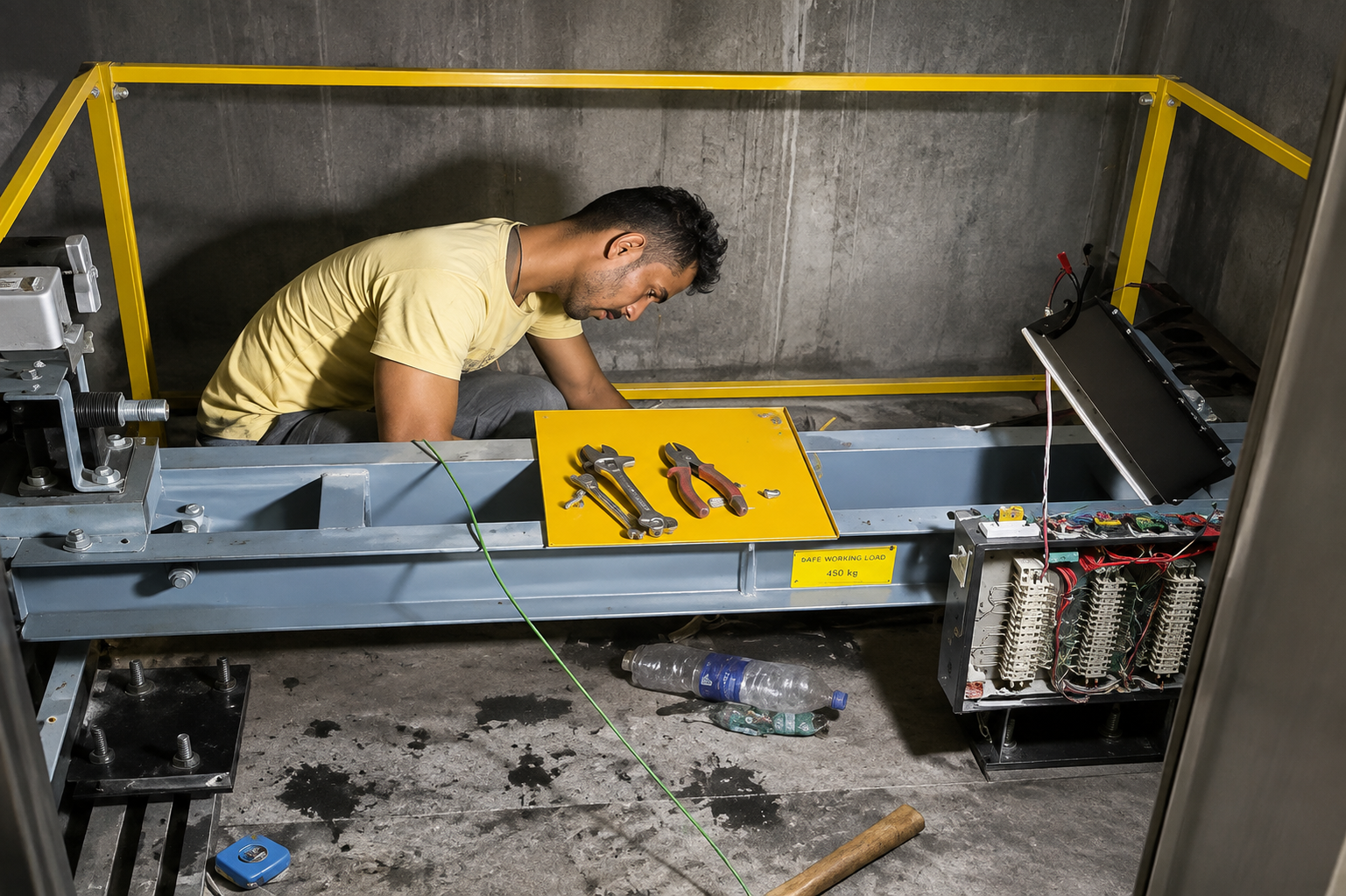
Choosing the Right Machine Roomless Elevator
An MRL lift can be useful where building planning makes avoiding a separate conventional machine room desirable, but the available shaft space and other site conditions still need to be checked carefully.
Consider these factors before selecting an MRL lift:
For example, when planning a new office building, saving the space that would otherwise be allocated to a separate lift machine room can be useful. However, the decision should also consider shaft dimensions, equipment access and the overall building design.
Machine Roomless Elevator Comparison
Unique Elevators Lifts offers six lift categories for different building requirements. The comparison below highlights the main differences between them.
| Feature | Hydraulic Passenger Lift | Glass Home Lift | Passenger Lift | Hospital Lift | Goods Cum Passenger Lift | MACHINE ROOMLESS ELEVATOR |
|---|---|---|---|---|---|---|
| Primary Purpose | Passenger movement | Residential passenger movement | Passenger movement | Patient, attendant and staff movement | Goods and passenger movement | Passenger movement |
| Typical Application | Residential and suitable low-rise buildings | Homes and villas | Residential, commercial and institutional buildings | Hospitals and healthcare facilities | Commercial, industrial, warehouse and retail applications | Residential, commercial and institutional buildings |
| Typical Capacity | 272 kg to 1,020 kg for common passenger ratings | 250 kg to 400 kg in commonly published home-lift configurations | 272 kg to 1,020 kg for common passenger ratings | 1,020 kg, 1,360 kg and 1,768 kg are common reference capacities | Varies according to goods and passenger requirements | 272 kg to 1,360 kg and above, depending on configuration |
| Typical Speed | 0.30 m/s to 1.00 m/s | Around 0.15 m/s to 0.40 m/s in common home-lift configurations | Around 0.63 m/s to 1.75 m/s in common configurations | Selected according to hospital and building requirements | Around 0.50 m/s to 1.00 m/s in common configurations | Around 0.63 m/s to 1.75 m/s in common configurations |
| Drive System | Hydraulic | Depends on selected home-lift system | Generally traction | Depends on selected system | Depends on selected system | Generally traction |
| Machine Room | Depends on hydraulic arrangement | Depends on selected design | Depends on selected system | Depends on selected system | Depends on selected system | Separate conventional machine room generally not required |
| Goods Movement | No | No | No | Not the primary purpose | Yes | No |
| Passenger Movement | Yes | Yes | Yes | Yes | Yes | Yes |
| Main Selection Factors | Building height, capacity, space and usage | Home layout, space, capacity and design | Passenger traffic, capacity, height and space | Patient movement, cabin size and facility layout | Goods load, passenger use, cabin size and loading requirements | Shaft space, building design, capacity, travel and equipment arrangement |
| Best Considered For | Suitable hydraulic passenger applications | Private residential use | Regular passenger transportation | Healthcare facilities | Combined goods and passenger movement | Buildings where a machine-room-less arrangement is suitable |
The numerical values shown in this comparison are general reference figures for commonly available lift configurations. They should not be treated as fixed specifications of Unique Elevators Lifts. Actual capacity, speed, dimensions, drive arrangement and other technical details depend on the selected lift system and building requirements.
Elevator Safety Precautions
Essential Safety Guidelines
Emergency Situations
Need Quotes? Let's Discuss Your Lift Requirement!
Tell us about your building, number of floors, expected passenger movement, available shaft space and other requirements. Our team can help you discuss the available Machine Roomless Elevator options for your project.
Request a Quote